
Featured Researcher Bio - Boyd Padgett 2026
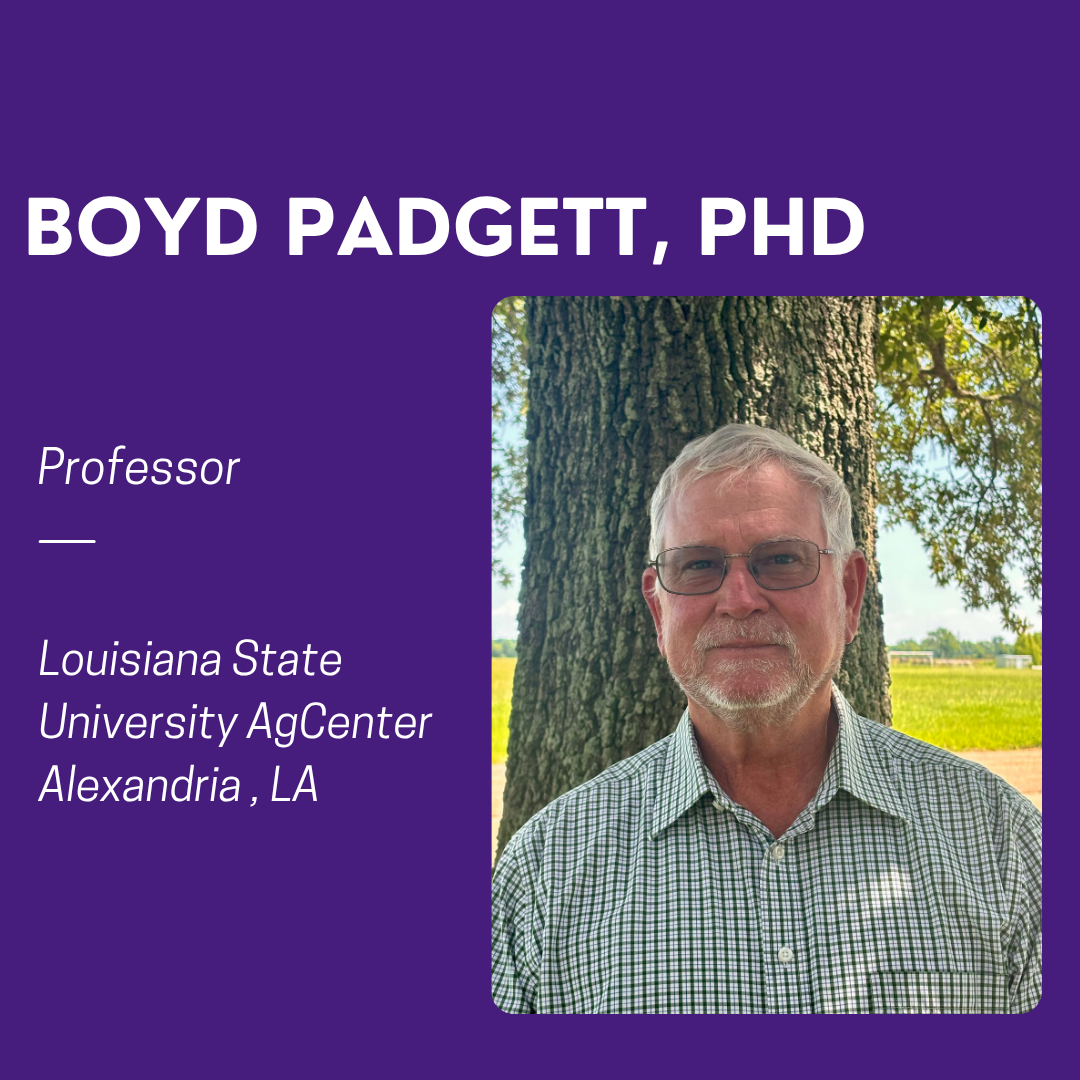
Meet Boyd Padgett, professor and extension/research row crop plant pathologist at the Louisiana State University (LSU) AgCenter Dean Lee Research and Extension Center in Alexandria, Louisiana. Padgett has been funded by the U.S. Wheat and Barley Scab Initiative (USWBSI) since 2004. His USWBSI-funded research is part of the Integrated Management Coordinated Project (IM-CP) and focuses on developing integrated management strategies and evaluating fungicide efficacy against Fusarium head blight for soft red winter wheat grown in Louisiana.
Growing Farmer Roots into Plant Pathology
Padgett grew up in Monroe, Louisiana. His paternal grandparents purchased 2,500 acres after retirement, cleared the land, and raised cattle. His maternal grandfather rented his 250-acre farm and while Padgett was growing up he worked for the farmer who leased the land. It was there that he developed a passion for row crop agriculture and decided he wanted to become a farmer.
Padgett attended Louisiana Tech University, where he majored in agricultural business. During his senior year, he completed an internship with Imperial Chemical Industries, a corporate predecessor to Syngenta. His supervisor, Keith Majure, encouraged him to pursue graduate school, and Padgett was accepted into the plant pathology mater’s program at the University of Georgia. There, he studied the epidemiology of tobacco etch virus in bell pepper and also conducted research on peanuts.
After earning his master’s degree, Padgett moved to LSU to pursue a doctorate degree in plant pathology, studying soybean stem canker epidemiology. In addition to being a graduate student, he worked full-time as a research associate working on wheat diseases.
After completing his doctorate, Padgett returned to the University of Georgia as an extension plant pathologist specializing in peanuts, soybeans, and small grains, with his home station at the Rural Development Center in Tifton, Georgia. Several years later, he accepted an extension cotton specialist position at LSU and was based at the Macon Ridge Research Station near Winnsboro. Although his appointment initially consisted of 75% research and 25% extension, it quickly shifted to 75% extension and 25% research.
In 2012, Padgett became the director for the LSU AgCenter’s Central Region, overseeing 10 parishes. He moved to the Dean Lee Research and Extension Center near Alexandria, Louisiana, where he served in a full-time administrative role for six years. After stepping down as director, he remained at the center and resumed a 70% extension, 15% research, and 15% teaching appointment. In addition to serving as the field crops pathologist, he is Louisiana’s small grains specialist and has also served twice as the interim soybean specialist.
Translating Research into Better Disease Management
Padgett considers educating stakeholders about effective FHB management strategies using USWBSI-generated data to be one of his greatest accomplishments. Results from the IM-CP help producers make more informed management decisions. He also enjoys collaborating with fellow scientists to develop economically effective disease management programs for wheat producers.
As part of his IM-CP research, Padgett especially enjoys working with the LSU wheat breeder to evaluate high-yielding breeding lines and varieties with resistance to Fusarium graminearum. He also evaluates new fungicides in combination with genetic resistance to develop effective FHB management programs in soft red winter wheat.
Padgett believes FHB will continue to present major challenges for soft red winter wheat producers. With disease severity varying from year to year, he knows first-hand the importance of continued development of integrated management programs that combine genetic resistance, cultural practices, and fungicides. “The pathogen’s ability to adapt to genetic resistance and fungicides makes it a moving target,” said Padgett.
Over the next twenty years, he believes breeders and plant pathologists will need to identify new sources of resistance and continue evaluating new fungicide chemistries to effectively manage FHB.
Developing Research-based Relationships
Padgett encourages graduate students and postdoctoral researchers to build relationships and collaborative research with experienced research and extension scientists, producers, and other stakeholders. “These relationships will provide insights into what the issues are in your region and provide direction for establishing your scab program,” said Padgett.
He also encourages early-career professionals to attend the National Fusarium Head Blight Forum and other professional meetings focused on FHB management. Finally, Padgett offers one simple piece of advice: “Don’t be afraid to ask questions.”
For more information about Dr. Boyd Padgett's research, visit his faculty page.
To learn more about others in the FHB community, check out all the previous USWBSI Featured Researchers/Advocates.